Floor Specification
The requirements for concrete industrial ground floors include the following:
Uniformly Distributed Loads and Dynamic Loads
- The floor should remain serviceable AND able to carry the required static point loads, uniformly distributed loads and dynamic loads, without unacceptable deflection, cracking, settlement or damage to joints.
Joints & Reinforcement
- Joints & reinforcement should be detail in both design and construction to minimise the risk of cracking.
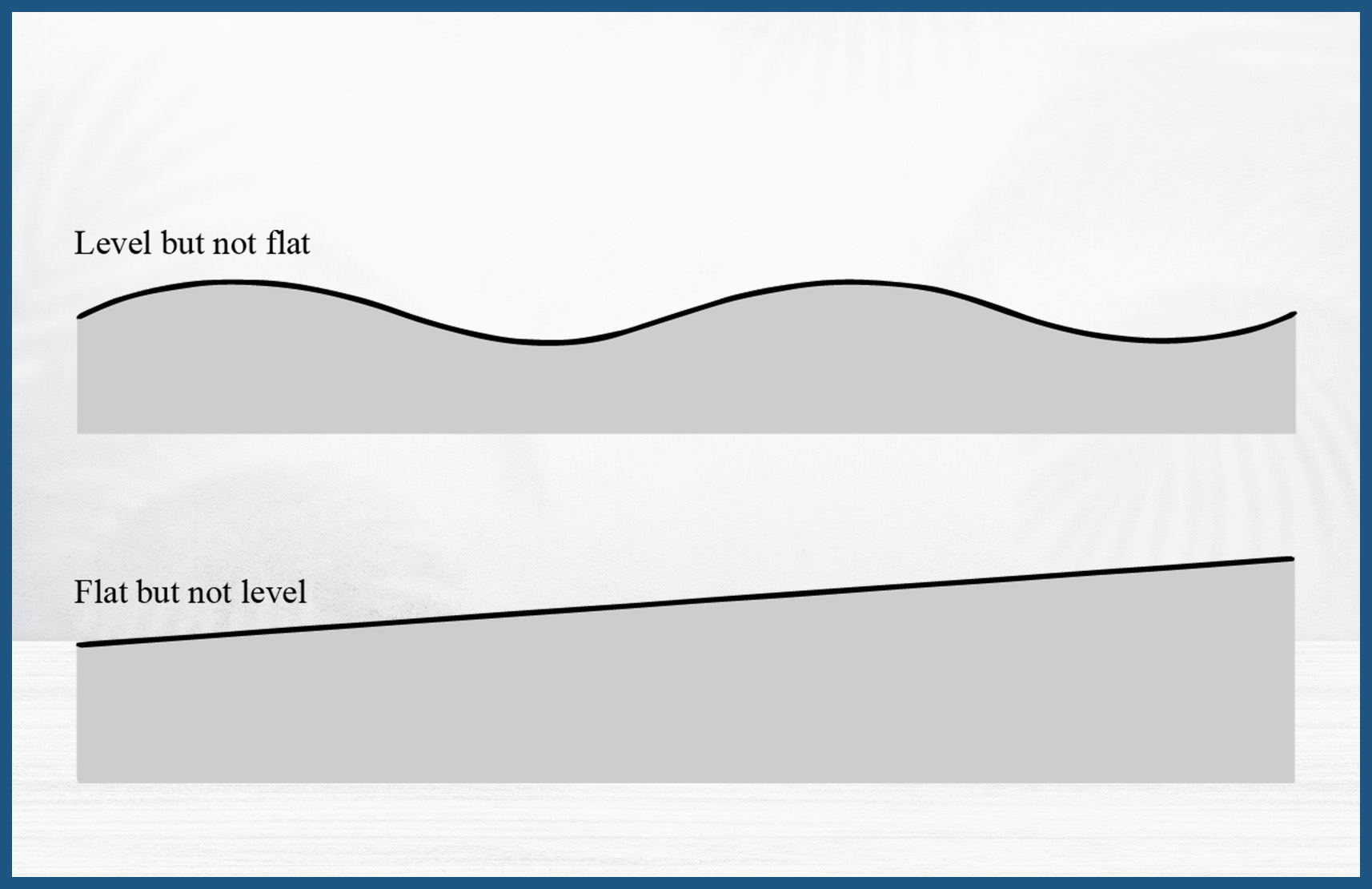
Floor Surface Regularity
- The floor surface should have suitable surface regularity, type of finish, suitable abrasion, chemical and slip resistance.
Benefits of Good Floor Surface Regularity
Reduce risk of collision between trucks and racking
Smooth material handling
Reduce driver fatiguesness
Lower machineries and floor maintenance
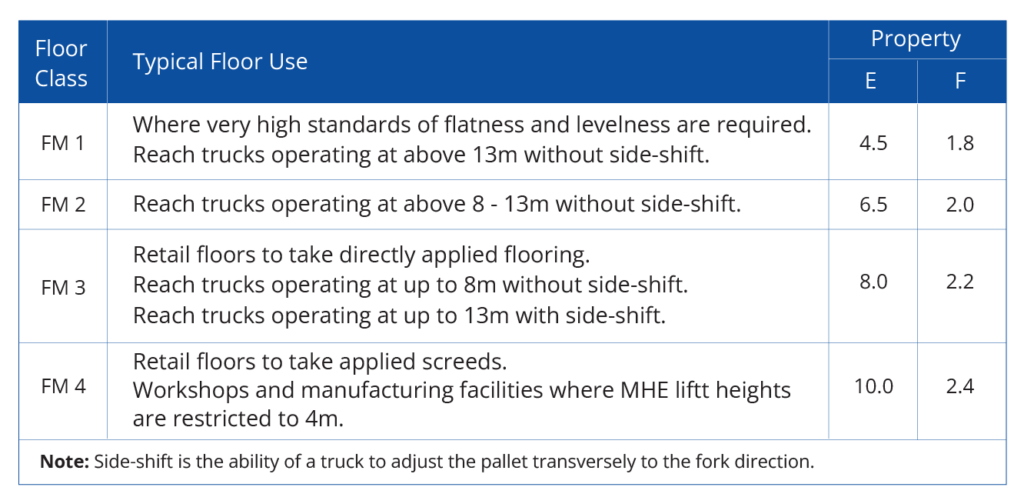
TR34- FM Classification Method
TR34 : Permissible 95 Percentile Values On Property E&F
- Test frequency = Area (m²) divided by 10 = survey run length (m).
- Two properties are measured in FM areas defined as below:
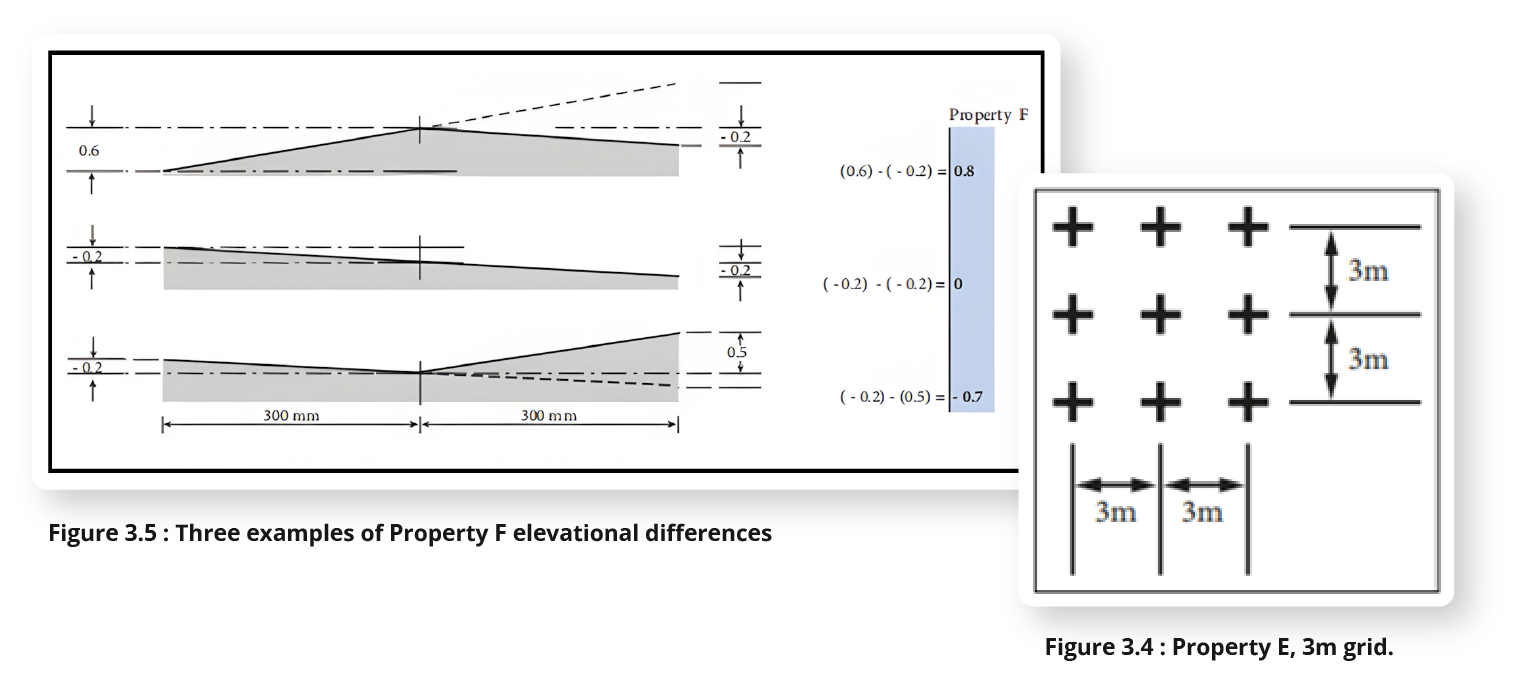
Property E
- To control levelness, the elevational difference in millimetres directly between fixed points 3m apart ( not across the diagonals ), see Figure 3.4.
Property F
- To control flatness, the change in elevational difference between two consecutive measurements of elevational difference each measured over 300mm, see Figure 3.5.
By using dipstick profiler, F speed reader or others to measure/take reading at every 300mm for flatness and 3000mm for levelness. Use the data obtained to do analysis and the 95 percentile value is calculated. The value must be smaller than the specified value in respective FM class.
ASTM E 1155 - F Number Method
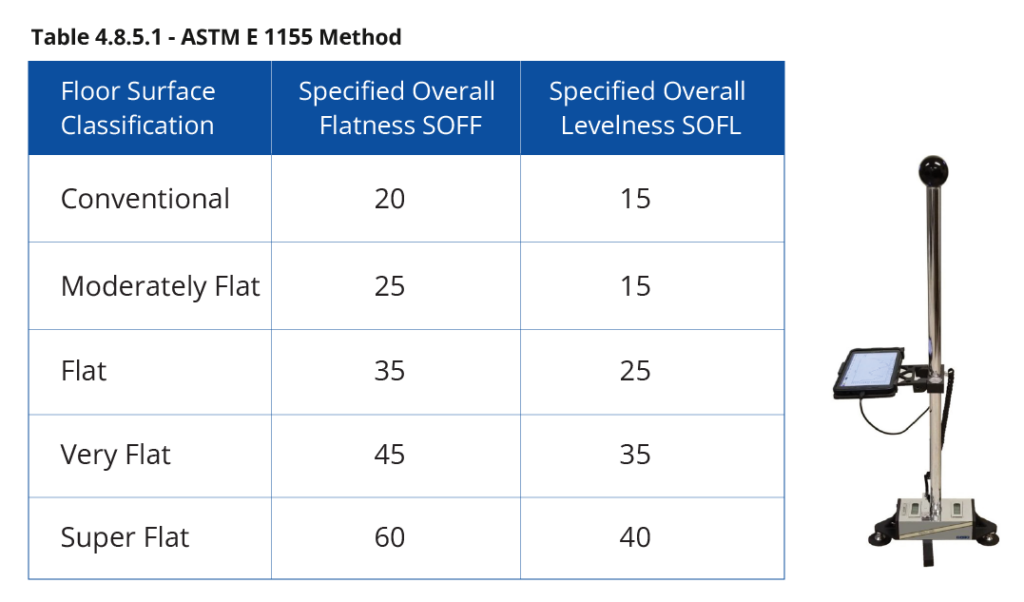
- Test frequency = Area (m²) divided by 10 = survey run length (m).
- By using dipstick profiler, F speed reader or others to measure/take reading at every 300mm for flatness and 3000mm for levelness. Use the data obtained and formula then convert to relevant F number for flatness & levelness.
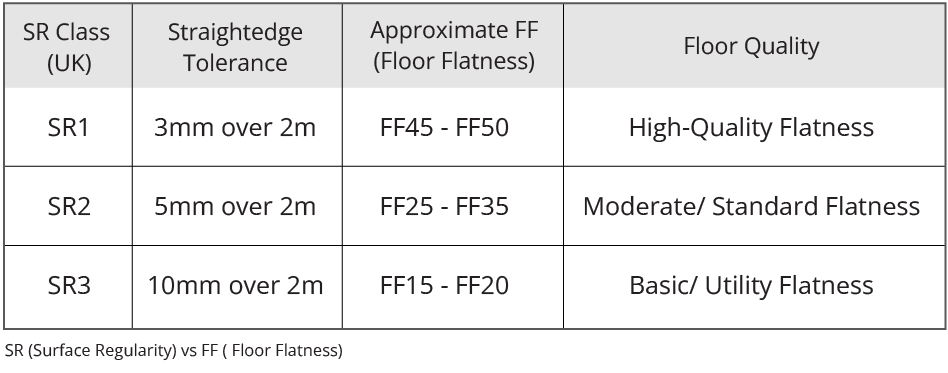
Surface Regulatiry - Gap Under Straight Edge Classification Method: BS 8204 Part 2:2003
Test frequency = 20m² do 1 point= Minimum number of straight edge tests ( e.g. 1000 m² / 20 = 50 test points )
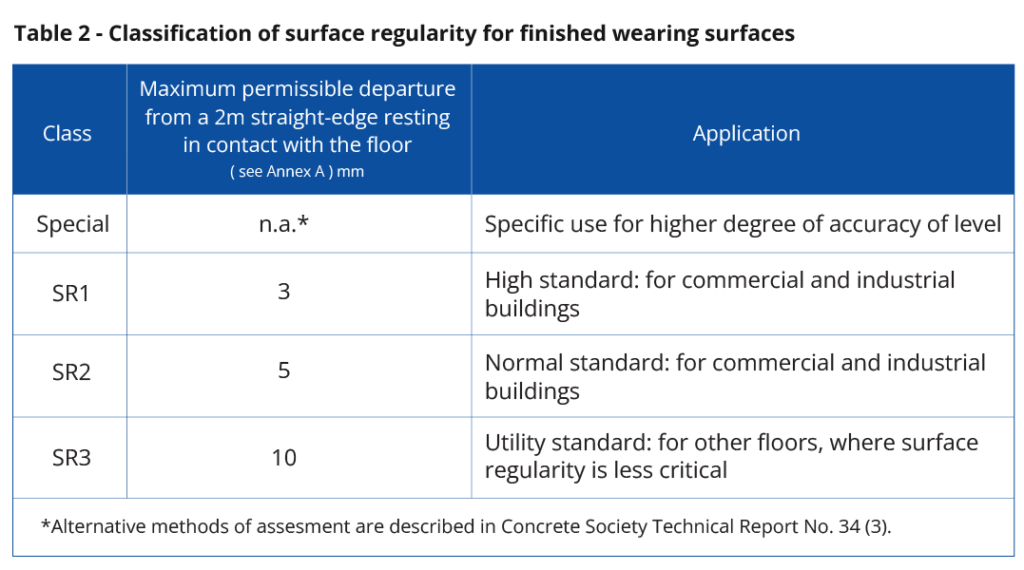
Comparison Table
ACI & ASTM and Gap under straight edge ; (approximate Gap in mm conversion to FF number)